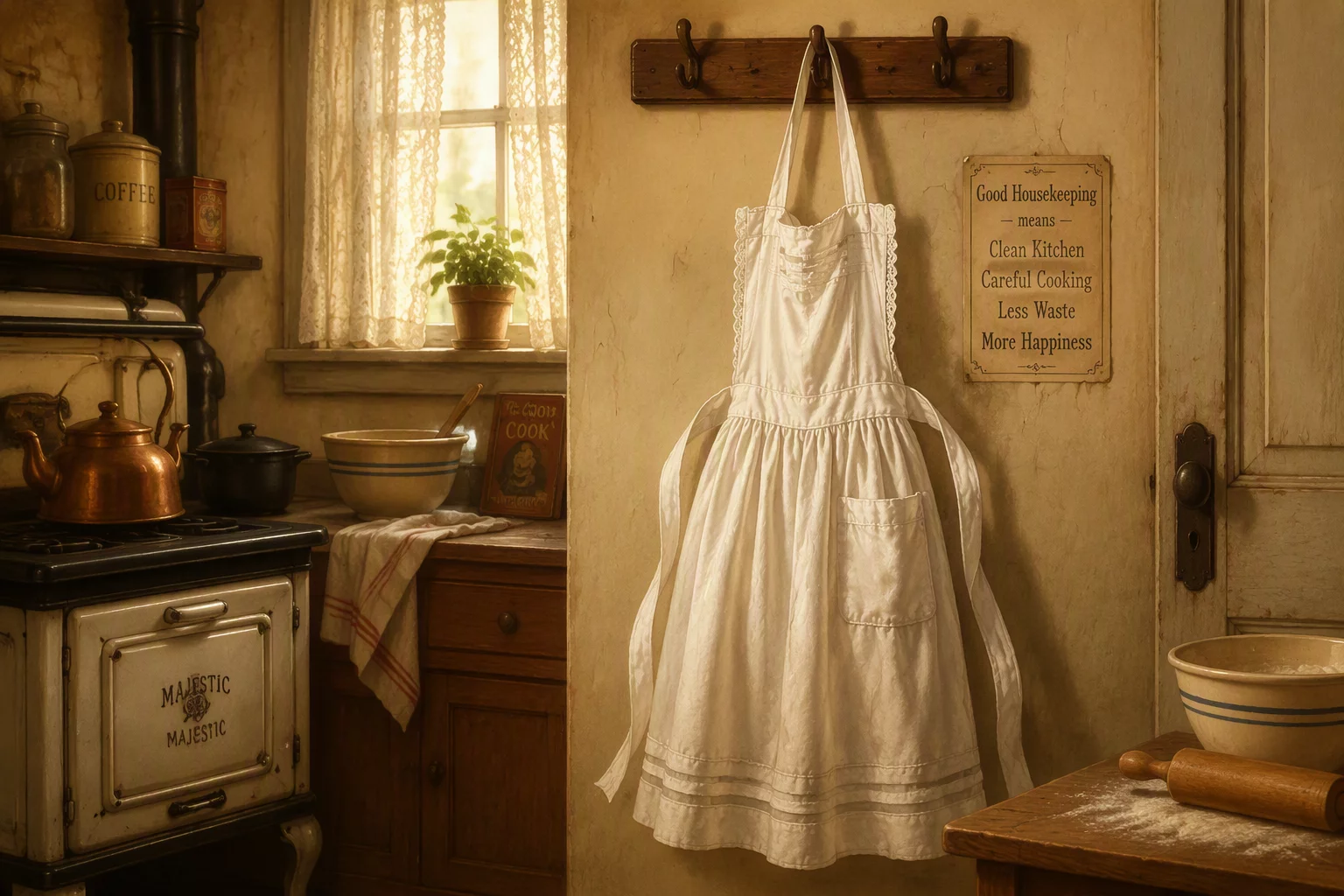
Kitchen aprons have protected cookery workers, artisans, and household culinary enthusiasts for centuries. The garment started as a straightforward protective layer of undyed cloth, yet over successive generations, culinary craftsmen refined it into an iconic emblem of kitchen authority, professional discipline, and durable everyday utility.
From Medieval Guilds to the Professional French Brigade
The word apron derives etymologically from the medieval French term naperon, denoting a small piece of decorative or utility table linen. Medieval tradespeople tied heavy coarse linen cloths around their waists to protect expensive garments underneath from grease, wood ash, and open-hearth sparks. In specialized trade guilds across Europe, particular apron cuts, colours, and lengths indicated seniority and trade discipline.
The Influence of Haute Cuisine and Auguste Escoffier
During the late nineteenth century, legendary chef Georges Auguste Escoffier systematized the brigade de cuisine. He introduced structured white uniforms alongside full-coverage bib and waist aprons. Clean white cotton became the definitive standard because kitchen cleanliness could be verified at a single glance during service inspections.
A clean apron serves not merely as a barrier against spills, but as the visible badge of an orderly mind and a disciplined kitchen.
Key Transformations Across Decades of Culinary Design
Apron silhouettes adjusted constantly to meet new technological realities and kitchen layouts. From hearth-side open fires to automated commercial ranges, apron makers adapted fabrics and hardware to handle harsher work conditions.
- Heavy woven flax and undyed hemp cloths supplied essential flame resistance in pre-industrial open-hearth kitchens.
- Twentieth-century hospitality operations adopted laundered twill cotton for standardized restaurant line service.
- Post-war domestic cooking popularized bib-cut aprons with decorative trims, prints, and deep front recipe pockets.
- Modern commercial kitchens introduced reinforced canvas, waxed textiles, and cross-back leather harnesses to eliminate neck fatigue.
Core Stages of Apron Evolution in Modern Culinary Work
Examining historical developments reveals how modern workwear arrived at its current standard of ergonomics and resilience.
- Utility waist ties served ancient guildsmen as single-purpose protectors against physical abrasion and coal soot.
- Full-length bib designs emerged in industrial workshops to shield upper torsos from direct steam and splashing oil.
- Ergonomic cross-back configurations and heavy-duty cargo utility pockets became the gold standard for twentieth-first-century culinary craftsmen.
Today, the culinary apron stands at the intersection of enduring craftsmanship and contemporary utility. Whether in a Michelin-starred restaurant, a busy specialty coffee bar, or a dedicated home kitchen, wearing a well-crafted apron continues a centuries-old tradition of pride in culinary work.
Community Discussion
Verified Reviews & TipsNo comments yet. Be the first to share your thoughts!
Leave a Thought or Review