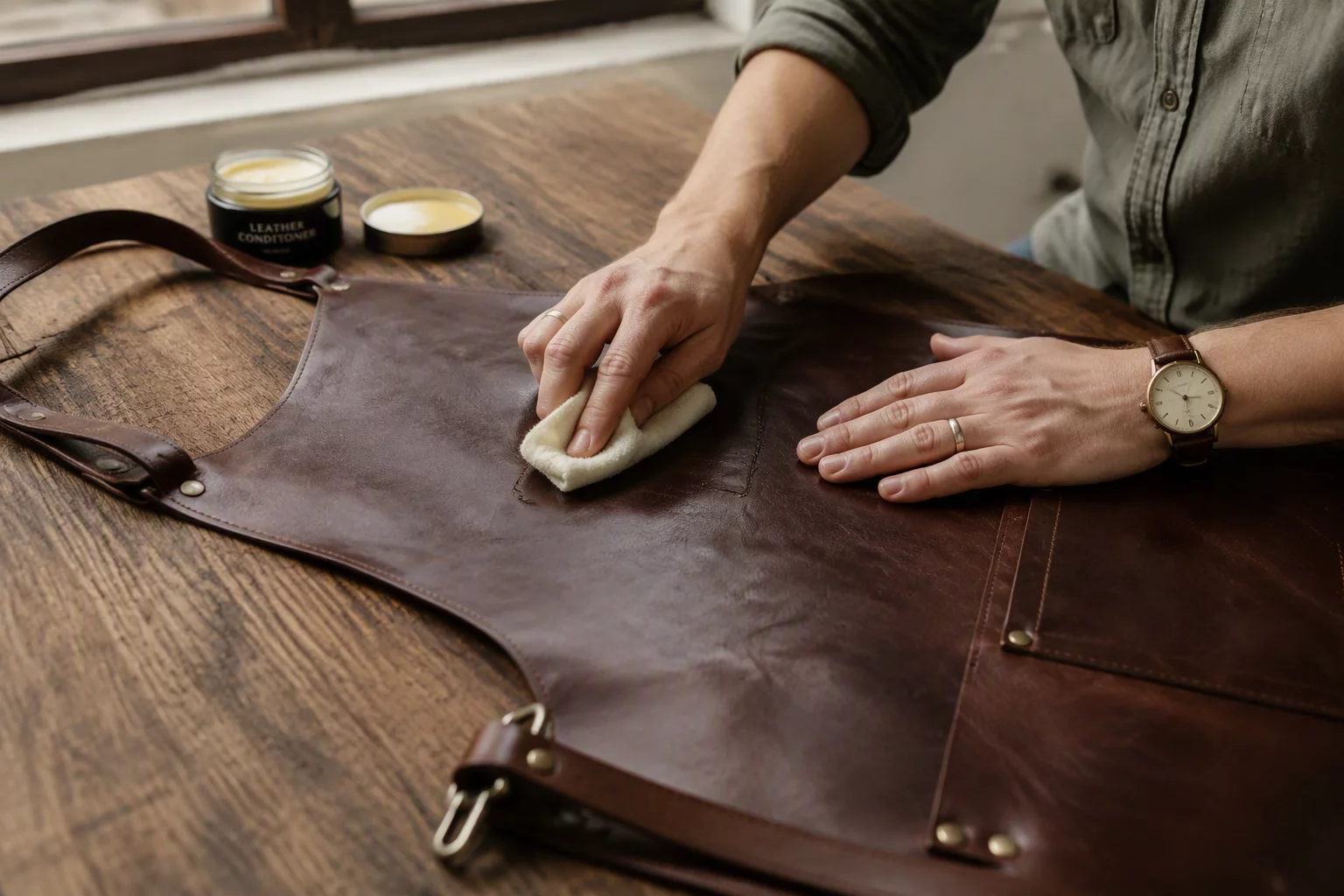
A quality leather apron provides rugged protection against kitchen spills, grilling embers, and workshop debris, but harsh cleaning methods can quickly damage genuine hide. Keeping leather pristine requires simple dry wiping, spot treatment for grease, and quarterly conditioning instead of water immersion or machine washing.
Daily Maintenance and Gentle Surface Care
After every busy shift at the grill, butcher block, or workbench, take a clean microfiber towel to remove loose dust, flour, or sauce droplets. Dampen the cloth very slightly with lukewarm tap water for stubborn residue, wringing it out thoroughly beforehand. Leather fibers absorb moisture rapidly, which leads to stiffness and internal drying when soaked excessively.
Treating Stubborn Oil and Grease Stains
Hot cooking grease and butter splatters require swift attention before oil seeps deep into the grain. Cover the fresh grease mark immediately with a layer of cornstarch or baking soda. Allow the powder to sit undisturbed for four to six hours to absorb the lipid molecules directly from the leather pores, then brush the powder off using a soft horsehair brush.
Genuine leather breathes and matures with every shift. Treat the hide with measured care, and the apron will comfortably outlast any standard cotton garment.
Essential Rules for Long-Term Leather Protection
Preserving the natural softness and protective qualities of leather hinges on avoiding aggressive household cleaners. Follow these fundamental maintenance guidelines:
- Rely exclusively on pH-neutral saddle soap or gentle leather cleaner diluted in water.
- Avoid bleach, acetone, alcohol wipes, and abrasive scourers under all circumstances.
- Never place a leather apron on top of radiators, heating vents, or near open fires to dry.
- Hang the apron on a wide, contoured wooden hanger in a cool, well-ventilated room.
The 3-Step Deep Conditioning Process
Periodic conditioning replenishes natural essential oils and prevents hairline cracks from forming across high-friction areas like waist bends and strap anchors:
- Wipe down the entire front and back panels with a lightly damp cloth to lift surface dust.
- Apply a dime-sized amount of beeswax or lanolin-based leather balm using a soft cotton pad in circular motions.
- Let the leather absorb the balm for twenty minutes, then buff gently with a clean microfibre cloth to restore a natural satin sheen.
Adhering to this simple routine every few months guarantees your leather apron develops a rich, handsome patina while staying flexible and protective through years of culinary work.
Community Discussion
Verified Reviews & TipsDave R.
Verified ChefThanks for the cleaning tips, my leather apron looks new again.
Greg H.
Culinary EnthusiastI was afraid of ruining it, this guide is perfect.
Leave a Thought or Review